

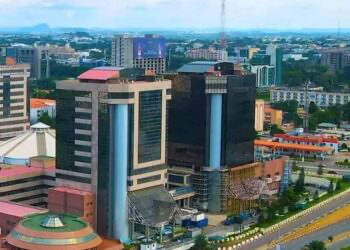
The dream of living and working in Nigeria’s Federal Capital Territory (FCT) is becoming increasingly unattainable for many low- and middle-income earners as soaring house rents, a shortage of affordable housing and rapid urbanisation continue to deepen the housing crisis in Abuja.
Findings reveal that civil servants, small business owners and other low-income residents are among the hardest hit, with many now relocating to satellite towns after being priced out of the city by escalating rental costs.
Rising Rents Force Residents to Relocate
Over the past two decades, Abuja’s growing population has triggered a steady increase in housing demand, pushing rents beyond the reach of many households.
As a result, thousands of families have moved from the city centre to suburbs such as Kubwa, Lugbe, Karu, Nyanya, Gwagwalada, Mararaba, Masaka, Suleja and even Keffi, where accommodation is relatively cheaper.
For many workers, however, the move comes at a cost.
Every morning, thousands leave these satellite communities before dawn, spending between two and three hours commuting to offices in the Abuja metropolis because living closer to their workplaces has become financially impossible.
Inflation, Housing Deficit Fuel Crisis
Housing experts attribute the worsening situation to a combination of factors, including inflation, rapid population growth, high land prices, rising building material costs, inadequate mortgage financing and Nigeria’s persistent housing deficit.
Some residents also blamed landlords and property owners for imposing excessive rent increases without corresponding improvements to their properties.
Findings also showed that tenants occupying buildings that are more than two decades old continue to face regular rent increases despite many of the structures receiving little or no renovation over the years.
The situation has also contributed to overcrowding, traffic congestion, higher transportation costs and the expansion of informal settlements, placing additional pressure on infrastructure and public services.
Tenants Struggle With Soaring Housing Costs
Residents who spoke during the investigation described the growing financial burden of renting homes in Abuja.
Estate agents and landlords now commonly demand one or two years’ rent in advance, alongside agency fees, legal fees and caution deposits, making it increasingly difficult for many families to secure accommodation.
Mrs Esther Onwuzulike, a civil servant, said she was forced to relocate from Garki to Karu after her rent became unaffordable.
According to her, the annual rent for the one-bedroom apartment she occupies with her family increased from ₦700,000 to ₦1.2 million.
She said efforts to find cheaper accommodation in areas such as Orozo were unsuccessful due to poor infrastructure, inadequate water supply, bad roads and security concerns.
While acknowledging that improved infrastructure has increased property values in some areas, she urged governments to prioritise affordable housing projects for low-income Nigerians.
“There is so much land in the FCT that can be developed for low-income earners. We are not finding it funny at all,” she said.
Residents Blame Estate Agents, Landlords
Another resident, Abubakar Habila, accused estate agents and landlords of contributing to the persistent rent increases.
He alleged that some agents encourage landlords to raise rents because higher rents translate into larger commissions through agency and legal fees.
Habila said he had been forced to change apartments twice in the last four years and fears another eviction when his current tenancy expires.
According to him, some landlords increase rents by as much as 100 per cent after every tenancy cycle, leaving existing tenants with little choice but to relocate.
Estate Agent Cites Inflation
A land agent identified simply as Ahmeed rejected claims that estate agents are solely responsible for the rent hikes.
He argued that inflation and the broader economic environment are the primary drivers of rising housing costs.
According to him, property owners adjust rents to reflect increasing maintenance and investment costs.
He added that the housing situation is unlikely to improve unless government strengthens urban planning and implements policies that support inclusive housing development.
No Rent Control in Abuja
Although tenancy relationships in the FCT are governed by the Recovery of Premises Act, there is currently no law prescribing a maximum percentage by which landlords can increase rent.
The absence of rent regulation has prompted many tenants to call for legislation that would prevent arbitrary and excessive rent increases while protecting both landlords and tenants.
Habila argued that the current situation raises serious concerns about housing affordability and social equity.
“In my case, I paid ₦2 million rent, ₦200,000 agency fee and ₦200,000 legal fee. After two years, my landlord wants to double the rent. Where do I get such money from?” he asked.
Empty Estates Amid Housing Shortage
Despite the growing demand for affordable housing, several estates and luxury apartment blocks in Abuja remain unoccupied for months and, in some cases, years.
Housing experts attribute the trend to speculative property investment, where homes are acquired primarily as stores of wealth rather than places of residence.
Some analysts also point to recent recoveries of hundreds of houses by anti-corruption agencies as evidence of underutilised housing stock.
A retired official of the Federal Capital Development Authority (FCDA), Beatrice Ajuma, called for a comprehensive audit of abandoned buildings and the creation of a reliable property registry linked to taxation.
She said identifying owners of vacant properties could help government determine whether Abuja’s housing challenge is driven more by shortages or by poor utilisation of existing housing stock.
Concerns Over Access to Government Housing Schemes
The Federal Government has introduced several initiatives to reduce Nigeria’s housing deficit, including the Renewed Hope Cities and Estates Programme, the National Social Housing Programme, land administration reforms and low-interest mortgages through the Federal Mortgage Bank of Nigeria (FMBN).
However, some residents questioned the accessibility of these programmes.
Mrs Chinasa Chukwudi said her application through the Renewed Hope Housing portal was unsuccessful despite earning about ₦250,000 monthly.
She said the rejection left her wondering whether the scheme primarily benefits civil servants and higher-income earners.
Another applicant also called for greater transparency regarding eligibility requirements to help prospective beneficiaries understand the application process.
Experts Recommend Lasting Solutions
Housing experts urged the Federal Capital Territory Administration and the Federal Government to accelerate affordable housing delivery, expand mortgage financing and simplify land administration.
They also recommended improving transport infrastructure in satellite towns, encouraging mixed-income housing developments, reviewing policies that encourage speculative property investment, and creating incentives for private developers to build affordable homes.
According to stakeholders, implementing these measures will improve housing affordability, reduce pressure on Abuja’s overstretched housing market and make decent accommodation more accessible to low- and middle-income earners.