

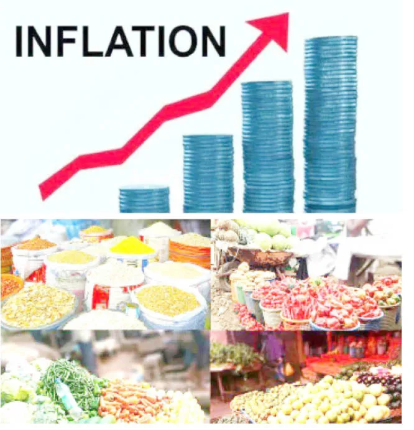
For Grace Adama, a health NGO worker living in Abuja, payday no longer provides the financial relief it once did.
The 135,000-naira monthly salary she earns is nearly twice Nigeria’s minimum wage, yet she says rising costs of food, housing, electricity and transportation quickly consume her income.
“If I’m paid today, my salary stays with me just for one week,” Adama told Reuters, describing the financial pressure facing millions of Nigerians.
Her experience reflects a wider cost-of-living crisis that has intensified since President Bola Ahmed Tinubu introduced sweeping economic reforms aimed at stabilising Nigeria’s finances and attracting investment.
Reforms improve investor confidence but squeeze households
Tinubu’s administration has implemented several major economic measures since taking office, including the removal of petrol subsidies, foreign exchange reforms and changes to electricity subsidies.
The government and investors have argued that the measures were necessary to address years of fiscal imbalances and create the foundation for stronger economic growth.
However, the immediate impact has been painful for many households.
The cost of preparing Nigeria’s popular jollof rice meal has more than doubled since Tinubu assumed office, according to an index by Lagos-based SBM Intelligence tracking the prices of its ingredients.
Petrol prices have also risen sharply following the removal of the subsidy, the weakening of the naira and movements in global oil prices.
For workers whose salaries have not increased at the same pace as living expenses, the result has been a significant decline in purchasing power.
More Nigerians struggle to maintain their standard of living
Adama said she has had to make difficult adjustments to survive.
She has reduced her consumption of meat, moved into a smaller apartment and increasingly relied on short-term loans to meet her financial obligations.
She also said she had been unable to provide the level of support she once gave her elderly mother in Benue State.
“I can’t even send money to my aged mother at home,” she said, adding that there were many things she could no longer afford.
Her experience reflects concerns about the broader deterioration in living standards.
The World Bank estimated that slightly more than half of Nigeria’s population lived in poverty in 2025, compared with roughly 42 per cent in 2022.
Investors see a different Nigeria
While households continue to struggle with higher prices, investors have responded more positively to the government’s economic reforms.
Nigeria’s stock market has recorded strong gains, while capital inflows reached a six-year high of $23 billion last year, according to the National Bureau of Statistics.
Investors have also welcomed developments in the oil sector, including increased participation by local companies and the commencement of operations at the 650,000-barrel-per-day Dangote Refinery near Lagos.
Thys Louw, a portfolio manager at investment firm Ninety One, described investor sentiment towards Nigeria as the strongest in decades.
According to him, investors appear willing to tolerate the short-term pain of reforms because they expect the measures to produce stronger economic fundamentals over time.
But ordinary Nigerians remain largely outside the investment boom
The improvement in financial markets has not necessarily translated into greater financial security for most Nigerians.
Fewer than five per cent of Nigerian adults participate in capital markets, according to the Nigerian Exchange.
Much of the recent capital inflow has also been concentrated in short-term financial assets such as Treasury bills, which can be quickly moved out of the country if market conditions deteriorate.
For households and businesses seeking loans, borrowing remains expensive.
The Central Bank of Nigeria’s key interest rate remains high as policymakers attempt to control inflation, making credit more difficult to access for individuals and businesses.
Fuel prices remain a major burden
The removal of petrol subsidies remains one of the most visible aspects of Tinubu’s economic reforms.
Petrol prices now average around 1,600 naira per litre nationally, although prices vary across locations.
While the price remains below levels in some neighbouring West African countries, it represents a major increase for Nigerians who previously benefited from years of subsidised petrol.
The increase has affected transportation costs and the prices of goods and services.
For food sellers such as Lagos-based Eji Uchenna, the impact is particularly noticeable as customers have reduced the quantities they purchase.
“The solution for me is for government to bring the fuel price down,” Uchenna said.
Economic reforms face a political test
The growing pressure on households could become an important political issue as Nigeria approaches its next general election.
Public frustration has increased alongside concerns over unemployment, insecurity, inflation and declining purchasing power.
A June voter sentiment tracker by SBM Intelligence found that 80 per cent of respondents believed Nigeria was moving in the wrong direction.
Security remains another major concern, with kidnapping and other forms of insecurity continuing to affect communities across the country.
Despite the widespread dissatisfaction, political analysts say the fragmented opposition could make it difficult to translate public anger into a unified electoral challenge.
Government says the benefits will take time
Supporters of the reforms argue that Nigeria is undergoing a necessary economic adjustment after years of policies that created major distortions in the foreign exchange market, fuel pricing and public finances.
Finance Minister Taiwo Oyedele has described the previous system as one based on “fiscal illusions”, arguing that the country needed to confront its underlying economic problems.
The government points to stronger revenue, improved investment flows, market performance and developments in the energy sector as evidence that the reforms are beginning to produce results.
Investors also expect lower inflation and interest rates eventually to translate into stronger economic activity and improved household incomes.
‘Prosperity for all Nigerians’ remains the bigger challenge
The central challenge for the Tinubu administration is now how to ensure that improvements in macroeconomic indicators translate into better living conditions for ordinary Nigerians.
While stronger financial markets, increased investment and improved government finances can provide a foundation for long-term growth, households such as Adama’s need immediate relief from the rising cost of basic necessities.
Oyedele acknowledged that the government must do more to ensure that economic growth benefits a wider section of the population.
“When inequality persists, it becomes dangerous. It’s like sitting on gunpowder; it explodes,” he said.
For millions of Nigerians, the success of the economic reforms will ultimately be judged not only by stock-market gains or foreign investment figures, but by whether their salaries can once again stretch beyond payday.