

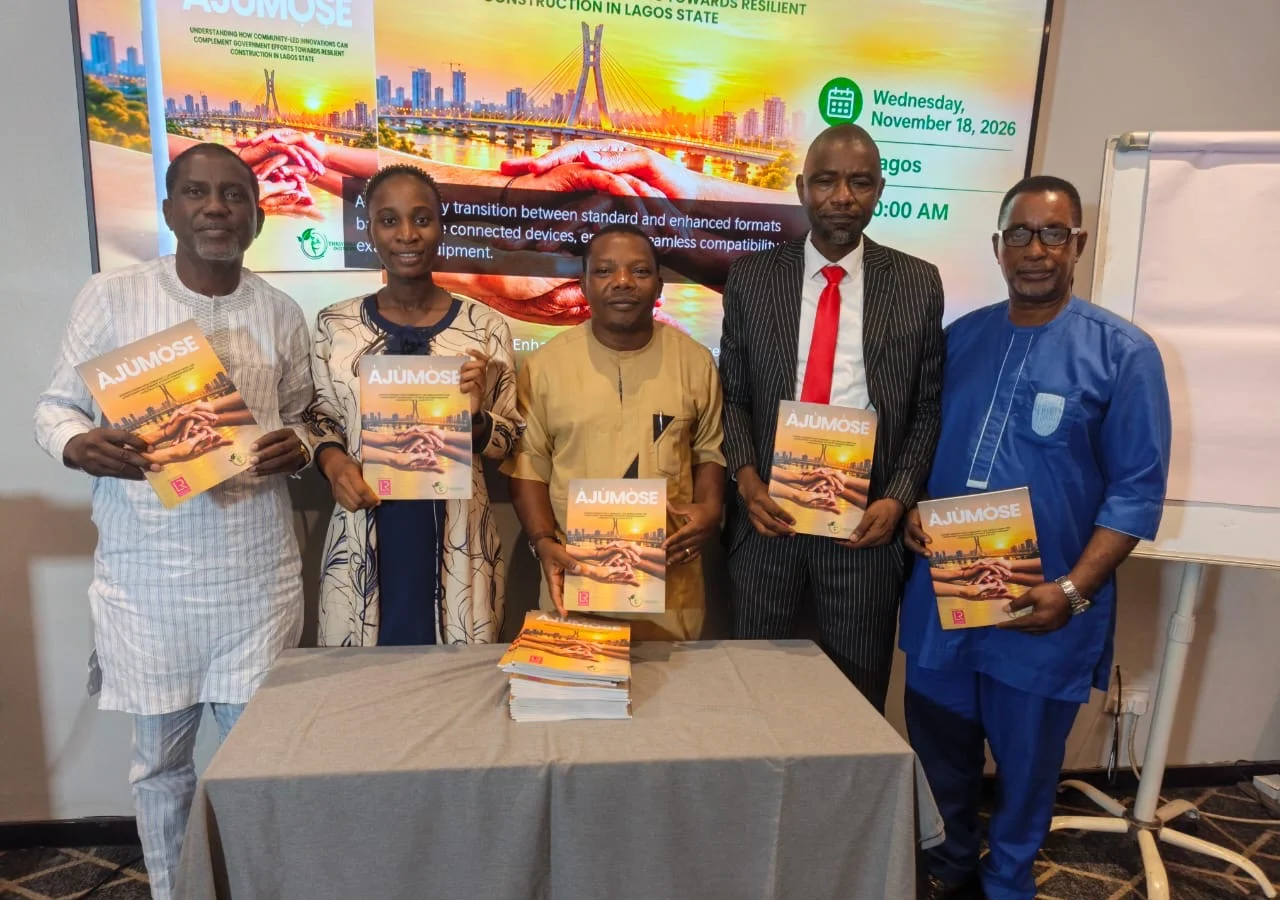
A non-governmental organisation, Thrivescape Initiative, has called for the establishment of community-based building safety committees to monitor construction projects and prevent building collapses in Lagos State.
The organisation said involving residents, artisan associations, traditional leaders and civil society groups in monitoring construction activities would strengthen accountability and complement existing government regulatory efforts.
The call followed a research project titled, “Ajumose: Understanding How Community-led Innovations Can Complement Government Efforts Towards Resilient Construction in Lagos State.”
Presenting the findings in Lagos on Wednesday, Professor Gbemiga Faniran of the Department of Urban and Regional Planning, Obafemi Awolowo University, said addressing building collapses required a shift from the predominantly reactive and institution-centred approach to a decentralised system that actively involved communities.
Faniran explained that the research recommended involving community stakeholders in monitoring construction activities, verifying initial site documentation and promptly reporting suspicious structures to relevant authorities.
He said grassroots building safety frameworks would strengthen neighbourhood accountability while complementing existing statutory regulatory mechanisms.
According to him, the research also recommended strengthening initiatives led by artisan associations and civil society organisations to develop community capacity for building safety monitoring.
The professor noted that although public awareness of building collapses was high, participation in formal safety programmes and knowledge of reporting channels remained limited.
He added that communities possessed significant but underutilised capacity to contribute to safer construction practices in Lagos.
Faniran identified six major areas of community-led innovation: grassroots vigilance and early detection, artisanal capacity and execution control, institutional co-governance, public safety education, material standards and asset stewardship, and statutory developer fees.
He advocated an integrated governance framework that would decentralise building safety oversight, protect whistleblowers, restructure statutory fee schedules and incorporate trained community members into regulatory workshops.
The researcher, however, stressed that community participation should complement rather than replace the responsibilities of qualified professionals and government regulatory agencies in technical assessments and enforcement.
Speaking on the research, Thrivescape Initiative Team Lead, Ms Tosin Aniramu, said building collapses remained a recurring concern in Lagos despite interventions by the Lagos State Building Control Agency (LASBCA), professional bodies and other stakeholders.
She said the state needed to move beyond responding to building collapses after disasters and adopt innovative preventive measures that could serve as models for other states.
According to Aniramu, communities are important stakeholders in the building safety process, from land acquisition and construction to building occupation, maintenance and reporting structural defects.
She said the research examined the perceived causes of building collapses and explored solutions based on community participation, innovation and collective responsibility.
“Our findings affirm something important: communities want to participate. They want to contribute and, more importantly, they have ideas about how building safety can be improved,” she said.
Aniramu also proposed the use of technology to enable residents to report suspected unsafe buildings, upload photographs, share locations and monitor the progress of their complaints.
She advocated the application of Artificial Intelligence and other emerging technologies to identify early warning signs of structural defects, prioritise inspections and help authorities monitor building safety hotspots.
She added that technology could improve access to material testing, structural assessments and other professional services, particularly for low-income households.
The Thrivescape team lead further proposed community-driven referral systems to connect residents with verified engineers and other built-environment professionals, reducing their exposure to unqualified service providers and unsafe construction practices.
However, she emphasised that communities could not implement the proposed solutions independently, calling for collaboration among government agencies, professional bodies, technology innovators, development partners and private-sector organisations.
“At Thrivescape Initiative, we are working toward a Lagos where building collapse would be eliminated through stronger institutions, accountability, informed communities and effective use of technology,” she said.
She urged stakeholders to translate the research findings into policies, stronger community-led initiatives and practical improvements in building safety management.
Aniramu described the initiative as an extension of the Lagos slogan, “Eko Ajumose”, which emphasises collective responsibility for the state’s development and safety.
Earlier, the General Manager of LASBCA, Florence Gbaye, commended Thrivescape Initiative for producing what she described as a detailed research report.
Gbaye, represented by the agency’s Deputy Director, Mr Toyin Dada, pledged collaboration with the organisation on public enlightenment and encouraged residents to report suspected building safety risks promptly.
Similarly, the General Manager of the Lagos State Physical Planning Permit Authority (LASPPPA), Mr Kehinde Osinaike, highlighted the importance of community-led innovations in promoting sustainable construction and urban development.
Osinaike, represented by a director at the agency, Mr Akintunji Ramon, called for stronger cooperation among government institutions, construction professionals and communities to address urban development challenges.
He commended the organisers and expressed optimism that government support and community-driven innovations would contribute to building a safer and more resilient Lagos.
Also speaking, the Chairman of the Christian Association of Nigeria (CAN), Alimosho Zone, Rev. Samuel Adeyemi, urged residents to promptly report suspected building defects and signs of structural danger.