

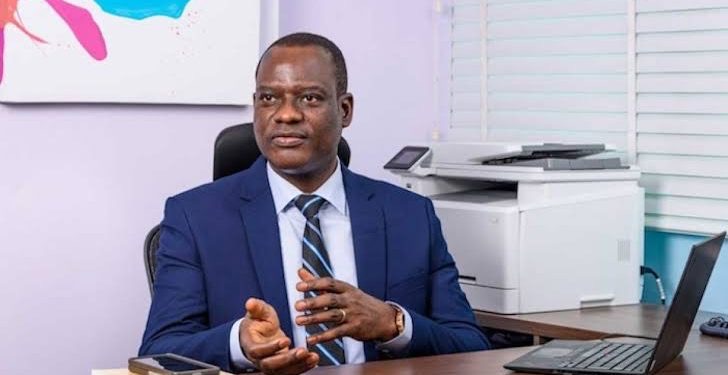
Nigeria cannot solve its housing shortage by simply constructing more houses without addressing access to affordable financing, the Minister of Finance and Coordinating Minister of the Economy, Taiwo Oyedele, has said.
Oyedele made this known on Tuesday, November 17, at the ninth Affordable Housing Finance and Investment Summit and Expo (AHFIS 9.0) in Abuja, where he was represented by his Special Assistant on Physical Risk Management and Sustainability, Dr Greg Ezeilo.
According to the News Agency of Nigeria (NAN), the minister said the country’s housing challenge extended beyond building designs and construction, stressing the need for improved financing arrangements, stronger institutional coordination and mortgage products that reflect Nigerians’ income realities.
He called for greater collaboration among property developers, mortgage institutions, commercial banks, pension funds, insurance companies, capital market operators and public institutions to expand access to homeownership.
Oyedele also advocated housing finance products that accommodate Nigerians with irregular, seasonal and informal-sector incomes, many of whom struggle to meet the requirements of conventional mortgage arrangements.
The summit also highlighted the scale of Nigeria’s housing challenge, with its founder and convener, Dr Saheed Adelakun, estimating the country’s housing deficit at more than 28 million units, compared with over 53 million across Africa.
Adelakun announced plans for a proposed 500-unit affordable housing development in Abuja, with the cost of each unit capped at ₦20 million.
He said the organisers were working to secure guarantees from prospective homebuyers and arrange pre-approved mortgages for qualified applicants who were saving towards their equity contributions.
Meanwhile, the Federal Government is relying on the ₦1 trillion MOFI Real Estate Investment Fund (MREIF) to expand access to mortgage financing.
President Bola Tinubu disclosed on November 17 that eligible Nigerians could access mortgages of up to ₦100 million at a fixed interest rate of 9.75 per cent, repayable over 20 years, with an initial deposit of 10 per cent.
In a statement published on his verified X account, Tinubu said more than 2,300 Nigerians across 27 states had accessed ₦160 billion in mortgage financing through the scheme.
However, the repayment requirements have raised questions about how accessible the facility is to low-income earners.
A calculation based on the announced terms shows that purchasing a ₦20 million property would require an initial deposit of ₦2 million, leaving a mortgage balance of ₦18 million.
At an interest rate of 9.75 per cent over 20 years, the estimated monthly repayment would be approximately ₦171,000, excluding additional charges and insurance.
This is about 2.4 times Nigeria’s ₦70,000 national minimum wage, highlighting the financial difficulties low-income workers could face despite the availability of subsidised mortgage financing.
The challenge is particularly significant for traders, artisans, farmers and other informal-sector workers whose earnings may fluctuate and who often lack the conventional income records required by mortgage lenders.
Oyedele’s intervention therefore highlights a broader challenge in Nigeria’s housing market: making financing available is not enough; mortgage arrangements must also reflect what prospective homeowners can realistically afford.
Although MREIF provides a financing channel for eligible borrowers, its reported reach of more than 2,300 beneficiaries remains relatively small compared with the country’s estimated housing deficit.
Expanding access to affordable homeownership will require more flexible mortgage assessment procedures, longer-term funding arrangements and alternative financing models that accommodate the actual income patterns of ordinary Nigerians.