

The Federal Government has defended its proposed $21.7bn supplementary external borrowing plan, describing it as a long-term investment programme designed to expand infrastructure, improve productivity and support economic growth.
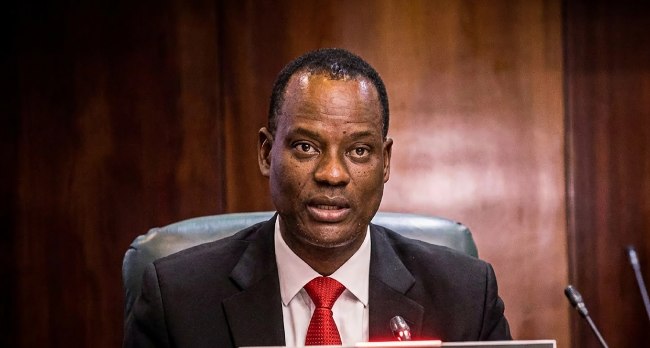
The Minister of Finance and Coordinating Minister of the Economy, Taiwo Oyedele, defended the plan on Wednesday while briefing State House correspondents after the Federal Executive Council meeting presided over by President Bola Tinubu in Abuja.
Oyedele said the proposal covers 46 projects across 11 sectors, with an average project lifespan of five years. He stressed that the plan does not mean the government will borrow the entire amount.
According to the minister, about $10.6bn would fund transportation infrastructure, including sections of the Lagos–Calabar and Sokoto–Badagry highways and the Kano–Kaduna Metro Rail project.
He added that 29 projects would receive concessional or blended financing, while 10 flagship projects account for $12.5bn, representing 58 per cent of the total plan.
FG Explains Borrowing Terms And Project Funding
Oyedele said approximately $7.9bn would come from multilateral and bilateral development partners, with the World Bank providing $5bn at an average interest rate of 2.1 per cent.
He added that the commercial component carried an indicative average interest rate of 7.8 per cent, below the 9.1 to 9.6 per cent yield on Nigeria’s November 2025 Eurobond.
The minister attributed the financing terms to improved credit ratings from Fitch, Moody’s and S&P.
He also disclosed that $4.8bn of the proposed financing was allocated to subnational governments and agencies. Of this amount, $3.3bn would go directly to states, while $1.45bn would pass through agencies and development finance institutions.
These institutions include the Bank of Industry, Development Bank of Nigeria, Transmission Company of Nigeria and electricity distribution companies.
Oyedele said the Federal Government coordinates external borrowing on behalf of the country, explaining that the entire $21.7bn should not be interpreted as borrowing exclusively for federal government projects.
Power, Rail And Road Projects Receive Approvals
The minister highlighted four financing and infrastructure decisions approved by the Federal Executive Council.
The first was a €155.9m credit facility from Deutsche Bank and other lenders to upgrade 132/33kV substations under Phase One of the Presidential Power Initiative.
He said the project would improve electricity reliability for households and businesses while helping to reduce energy costs.
The council also approved a $970m syndicated term loan from Standard Chartered and the Africa Finance Corporation to finance rolling stock for the Karu–Maradi rail line.
Oyedele said the investment would support freight movement, regional trade and the Northern Economic Corridor while reducing logistics costs.
Another approval involved a €76.8m credit facility from the ECOWAS Bank for Investment and Development to Bauchi State for its Transport Infrastructure Development Programme.
The programme will cover rural and urban roads, including farm-to-market routes intended to improve agricultural distribution and food security.
The council also approved investment in non-intrusive inspection scanners, technical support, repairs and maintenance for the Nigeria Customs Service. The minister said the equipment would accelerate cargo clearance and help detect smuggling, misdeclaration, contraband and illegal weapons.
Oyedele Says Previous Money Printing Fuelled Inflation
Defending the administration’s economic policies, Oyedele said Nigeria faced severe economic pressures when the Tinubu government assumed office in May 2023.
He cited inflation of 22.41 per cent, net foreign reserves of $859m and a gap of more than 60 per cent between official and parallel foreign exchange rates.
He also claimed that the previous administration had printed more than ₦30tn, equivalent to over $20bn at the time, and argued that the resulting inflationary pressures continued to affect the economy.
According to Oyedele, debt servicing consumed 97 per cent of government revenue, while about 27 states struggled to pay salaries and owed pension and gratuity arrears.
He maintained that the current administration’s reforms had helped prevent a more severe economic and currency crisis.
On petrol subsidy removal, the minister traced the policy’s history to 1973, arguing that repeated increases in petrol prices had imposed hardship without resolving the underlying problems.
He said the removal of the subsidy in 2023 had begun delivering benefits to the country.
FG Highlights Economic Growth And Falling Inflation
Oyedele said Nigeria’s economic growth rate increased from 2.74 per cent in May 2023 to 4.43 per cent in the second quarter of 2026.
He also put Nigeria’s dollar-denominated growth rate for the first half of 2026 at 17 per cent, describing the country as one of the fastest-growing economies globally.
The minister said headline inflation fell to 14.63 per cent in September 2026, from 20.98 per cent a year earlier and a peak of about 34 per cent.
He added that month-on-month food inflation declined by 1.55 per cent, which he described as deflation in food prices.
According to him, foreign reserves had risen above $55bn, while net reserves exceeded $45bn, compared with less than $1bn three years earlier.
Oyedele said the naira was trading between ₦1,330 and ₦1,350 to the dollar and expressed confidence that the currency could appreciate further.
He also reported that Nigeria’s tax-to-GDP ratio rose from about seven per cent in 2023 to approximately 12.5 per cent at the end of 2025. Meanwhile, the debt service-to-revenue ratio had declined from 97 per cent to below 60 per cent, he said.
The minister further cited improvements in revenue allocations to the three tiers of government and international credit ratings, alongside Nigeria’s exit from the Financial Action Task Force grey list and the European Union’s deficiency list.
Government Outlines Food Price Stabilisation Plan
Oyedele said the Federal Executive Council had adopted food price stability as a priority, with the Federal Government working alongside state governments under the National Economic Council’s 90-day action plan.
He said the immediate objective was to stabilise or reduce the prices of staple foods, including rice, yam, beans and maize, before the end of 2026.
The government plans to assess the gap between domestic food production and consumption to determine where targeted imports may be necessary.
Oyedele said the proposed import policy would focus on unprocessed brown rice to protect local milling jobs and processing capacity.
Over the medium and long term, the government plans to expand irrigation, improve crop yields through science and reduce post-harvest losses.
The minister said the broader objective was to make food more affordable, strengthen domestic production and increase exports of processed agricultural products.
The council also adopted a target of achieving single-digit inflation by the end of 2027 or earlier.
FG Cites Student Loans And Cash Transfers
Addressing concerns about the gap between improving economic indicators and the living conditions of Nigerians, Oyedele highlighted government intervention programmes.
He said the Nigerian Education Loan Fund had disbursed ₦372.6bn to more than 1.5 million students to support tuition and stipends.
He added that more than 10 million households had received cash transfers worth over ₦600bn, with the government targeting at least 15 million households.
According to the minister, more than 800,000 micro, small and medium-sized enterprises had also accessed subsidised loans at single-digit interest rates, mainly through the Bank of Industry.
Oyedele further said low-income earners making up to ₦100,000 monthly had been exempted from personal income tax.
He stated that small businesses with annual turnover not exceeding ₦100m were exempt from corporate income tax, value-added tax obligations and withholding tax deductions under the relevant measures.
The minister also said Nigeria’s capital market had expanded from approximately ₦30tn to more than ₦160tn in three years, with small investors benefiting from capital gains tax exemptions.
Atiku Calls For Transparency Over Loan Plan
The government’s defence comes amid criticism of President Tinubu’s request to the National Assembly for approval of the supplementary external borrowing plan.
Former Vice President Atiku Abubakar and other critics have questioned the proposal.
On Tuesday, Atiku urged the National Assembly to suspend consideration of the request until the Federal Government publicly disclosed the projects the proposed loans would finance.
Oyedele maintained that the plan was intended to create long-term economic value through infrastructure investment, improved productivity and lower logistics costs.
He argued that borrowing could support development when the economic value generated by the financed projects exceeded the cost of the loans.