

The Federal Government has unveiled plans to increase annual mortgage disbursements to 5,000 and raise the maximum mortgage loan amount from ₦50 million to ₦85 million by 2028 as part of broader reforms aimed at improving housing affordability and expanding access to homeownership in Nigeria.
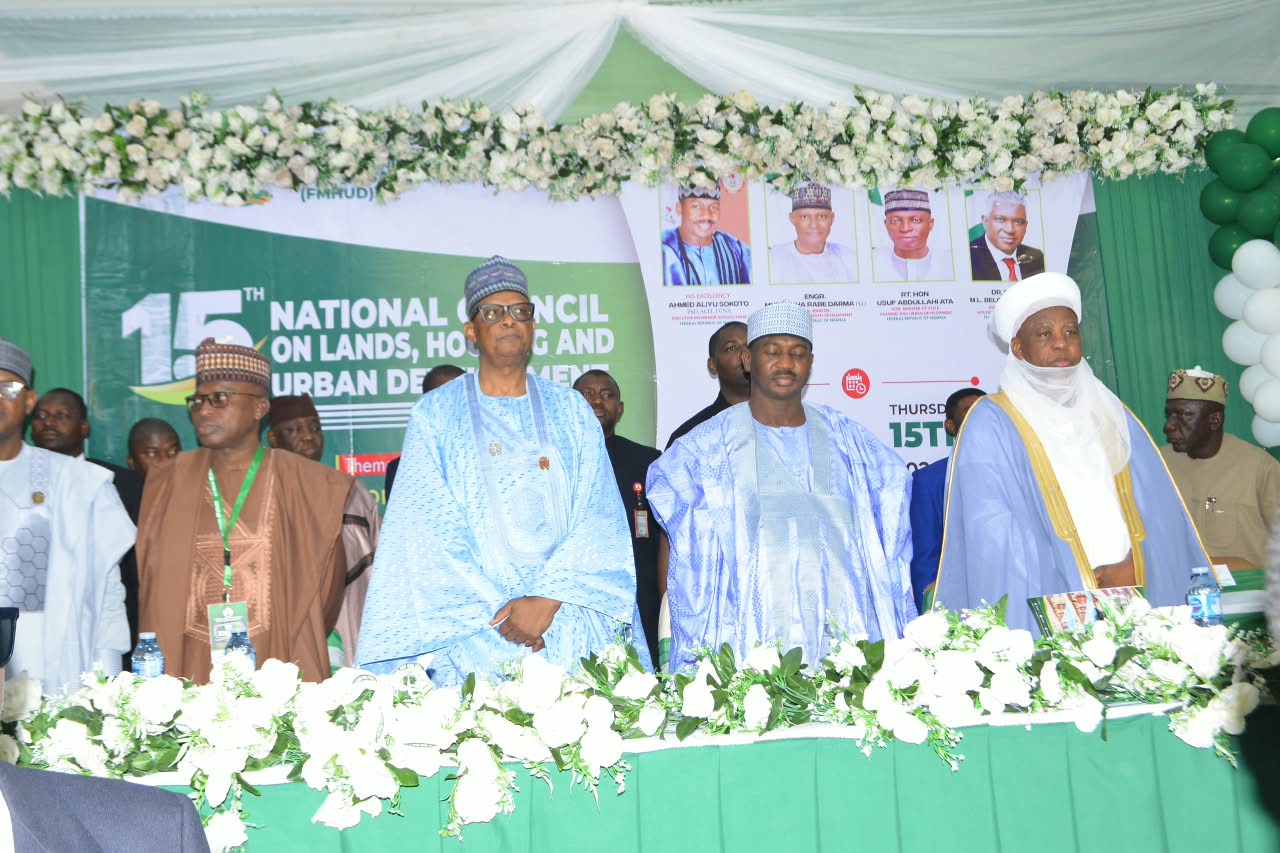
The Minister of Housing and Urban Development, Engr. Dr. Muttaqha Rabe Darma, disclosed the targets during the opening of the commissioners’ meeting at the 15th National Council on Lands, Housing and Urban Development in Sokoto State.
Speaking at the meeting, Darma reaffirmed the Federal Government’s commitment to strengthening Nigeria’s housing finance system, improving mortgage accessibility and addressing longstanding challenges preventing low- and middle-income earners from owning homes.

FG Sets New Mortgage Disbursement Targets
As part of the proposed reforms, the Federal Government has directed the Federal Mortgage Bank of Nigeria (FMBN) to increase mortgage disbursements and ensure that at least 70 per cent of the previous year’s National Housing Fund (NHF) contributions are disbursed annually through mortgage financing.
The Minister announced a target of 2,000 mortgages in 2026, with plans to increase the figure to 5,000 by 2028.
According to him, the initiative seeks to narrow the gap between contributions made by Nigerian workers to the National Housing Fund and the actual mortgage facilities available to eligible contributors.
The government also plans to increase the maximum mortgage loan from ₦50 million to ₦85 million by 2028, potentially improving access to housing finance amid rising property prices and construction costs.
Informal Sector Workers to Benefit from Housing Finance Reforms
In a move to promote financial inclusion, the Federal Government is targeting the allocation of between 30 and 40 per cent of mortgage bookings to workers in Nigeria’s informal sector.
The initiative is expected to address some of the barriers faced by self-employed individuals, artisans, traders and other informal-sector workers who often struggle to access conventional mortgage facilities because of irregular income and limited financial documentation.
Darma explained that the proposed reforms would strengthen the housing finance system and enable more Nigerians to benefit from the National Housing Fund.
The Minister further disclosed plans to establish a National Housing Finance Authority to improve regulatory coordination, strengthen institutional accountability and enhance the overall performance of the country’s housing finance sector.
Diaspora Mortgage Program to Expand Homeownership Opportunities
The Minister also highlighted the recently launched Diaspora Mortgage Program, designed to provide Nigerians living abroad with opportunities to finance and acquire residential properties in Nigeria.
He stressed that addressing Nigeria’s housing deficit requires more than increasing the number of houses constructed, noting that an effective mortgage financing system is essential to ensuring that completed homes remain accessible to prospective buyers.
Drawing lessons from Rwanda, Darma pointed to the country’s mortgage market reforms and refinancing mechanisms as examples of how institutional improvements can support housing finance development.
He reiterated the Federal Government’s determination to implement policies that would make homeownership more accessible, particularly for low- and middle-income households.
Sokoto Government Highlights Affordable Housing Projects
In his keynote address, Sokoto State Governor, Ahmad Aliyu Sokoto, described housing as an essential component of human dignity, security, family stability and socioeconomic development.
The Governor highlighted ongoing housing initiatives in the state, including the 500-unit Sokoto New City Housing Project and an internally displaced persons (IDP) shelter program being implemented in partnership with the United Nations.
He explained that the projects are intended to improve access to affordable accommodation for low-income households and vulnerable residents.
Lawmakers Call for Single-Digit Mortgage Interest Rates
Also speaking at the meeting, the Chairman of the House Committee on Urban Development and Regional Planning, Hon. Awaji-Inombek Abiante, called for comprehensive policy reforms to address Nigeria’s housing challenges.
Abiante identified access to single-digit interest loans, affordable property pricing and transparent land registration processes as critical measures for improving homeownership opportunities.
He also advocated stronger development control, the introduction of a National Housing Identification Number and increased use of locally sourced building materials to reduce construction costs.
According to him, implementing these measures would help address structural barriers affecting housing affordability and delivery across the country.

National Housing Council to Drive Policy Implementation
The 15th National Council on Lands, Housing and Urban Development brought together the Minister, the Minister of State, state commissioners responsible for housing and heads of housing agencies across the federation.
The meeting provided a platform for reviewing housing sector priorities, considering recommendations from permanent secretaries and adopting resolutions aimed at accelerating housing development.
The resolutions are expected to guide relevant government institutions and stakeholders in implementing policies that support sustainable, affordable and inclusive housing delivery nationwide.
The proposed mortgage expansion, increased loan ceiling and institutional reforms signal the Federal Government’s intention to strengthen housing finance as a central component of its strategy for addressing Nigeria’s housing deficit.