

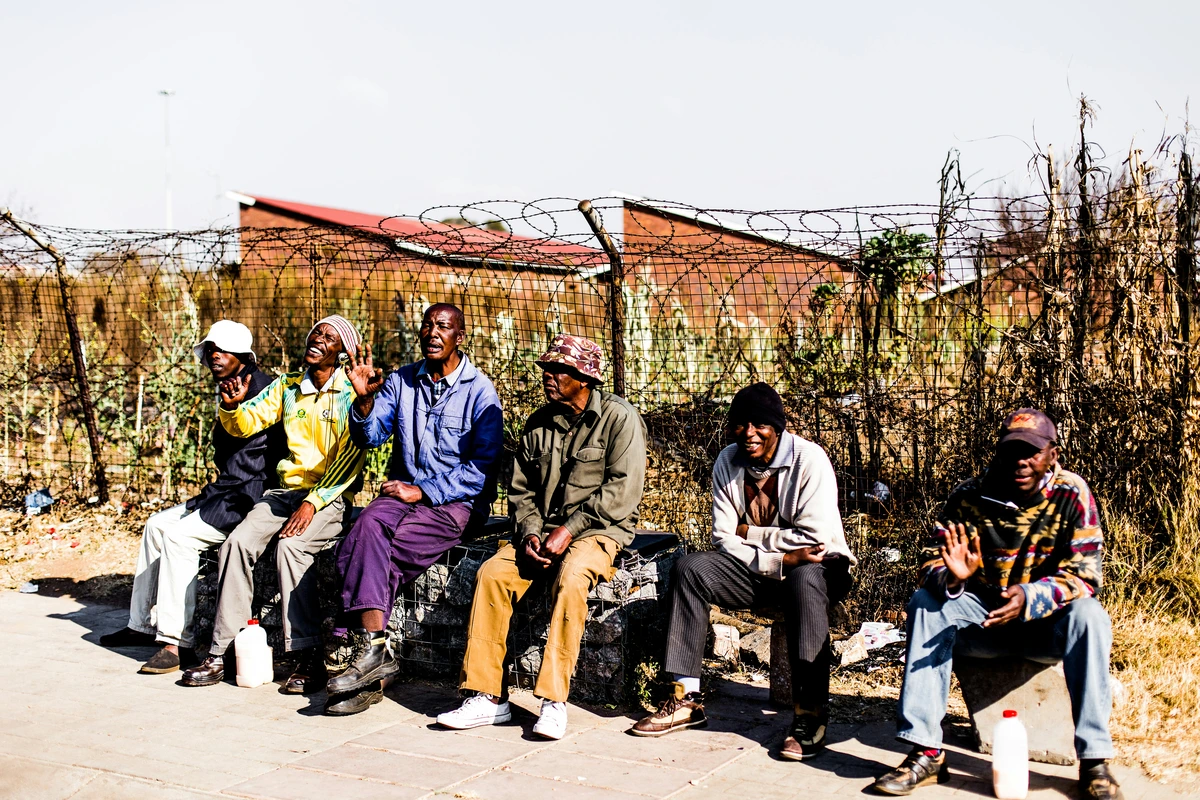
South Africa’s unemployment crisis has deepened, with the country’s official unemployment rate rising to 33.6 per cent in the second quarter of 2026 as the number of unemployed people climbed to 8.5 million.
The latest figures released by Statistics South Africa (Stats SA) on Tuesday show that unemployment increased from 32.7 per cent in the first quarter, marking the highest rate recorded in the country since 2022.
The data covers labour market conditions between April and June 2026 and points to renewed pressure on South Africa’s economy as businesses struggle to create enough jobs for the growing working-age population.
Unemployment rises by 345,000
According to the Quarterly Labour Force Survey (QLFS), the number of unemployed people increased by 345,000 during the quarter to reach 8.5 million.
At the same time, employment declined by 16,000, leaving the number of employed people at approximately 16.7 million.
Stats SA said the working-age population increased by 121,000, or 0.3 per cent, during the period, while the overall labour force expanded by 329,000, representing a 1.3 per cent increase.
The rise in unemployment pushed the official unemployment rate up by 0.9 percentage points.
The labour absorption rate also declined to 39.6 per cent.
Formal sector employment weakens
The deterioration was largely driven by employment losses in some major sectors of the economy.
Stats SA reported declines in employment in the formal and household sectors, although the informal sector recorded modest growth.
The community and social services sector and the mining industry recorded some of the biggest employment losses during the quarter.
However, the trade and construction sectors recorded increases in employment, offering some relief amid the broader weakness in the labour market.
Economic pressures weigh on jobs
The latest unemployment figures come against the backdrop of several economic pressures facing South Africa.
The country has been dealing with weak economic growth, elevated living costs and pressure on household incomes.
The period covered by the latest survey also followed the escalation of the Middle East conflict in February, which contributed to higher global energy prices and increased pressure on consumers and businesses.
The South African Reserve Bank also raised interest rates in May as policymakers sought to contain inflation, a move that could further weigh on borrowing, investment and consumer spending.
The central bank subsequently kept its benchmark interest rate at 7 per cent while warning that inflationary pressures could influence future monetary policy decisions.
Foreign-owned businesses face uncertain environment
The worsening employment figures have also renewed attention on South Africa’s business environment, particularly amid concerns over xenophobia and attacks targeting foreign nationals.
Several Nigerian entrepreneurs and other foreign business owners have reportedly shut down or relocated their businesses following incidents of harassment and attacks.
The situation has raised concerns about the potential impact of anti-foreigner sentiment on investment, entrepreneurship and employment.
Some Nigerian-owned businesses employ South African workers, meaning the closure or relocation of such businesses could also affect local employment.
The issue has previously triggered calls from some Nigerian business leaders and citizens for an economic response to what they describe as repeated attacks on Nigerians and their businesses in South Africa.
South Africa’s unemployment crisis deepens
The latest figures represent another setback for South Africa’s labour market.
The unemployment rate had already risen from 31.4 per cent in the fourth quarter of 2025 to 32.7 per cent in the first quarter of 2026.
The latest increase to 33.6 per cent means that an additional 345,000 people joined the ranks of the unemployed in just three months.
With 8.5 million people now officially unemployed, South Africa faces mounting pressure to accelerate job creation and attract investment while maintaining price stability.
The latest data also highlights the challenge confronting policymakers as they seek to revive economic growth in an environment where high unemployment, weak household spending and rising business costs continue to weigh on economic activity.
Nigeria’s unemployment figures differ
The development has also drawn comparisons with Nigeria, although the two countries use different labour-market methodologies.
Nigeria has not published a new official unemployment rate since November 2024 under its current quarterly labour-force reporting framework.
Following the rebasing of Nigeria’s labour-market metrics, the country’s unemployment rate has been estimated at 4.9 per cent.
However, the figures are not directly comparable with South Africa’s 33.6 per cent because of differences in methodology, definitions and labour-market measurement.
For South Africa, the latest figures underline the scale of the employment challenge facing the country, with millions of people still unable to secure jobs despite the economy’s efforts to return to stronger and more sustainable growth.