

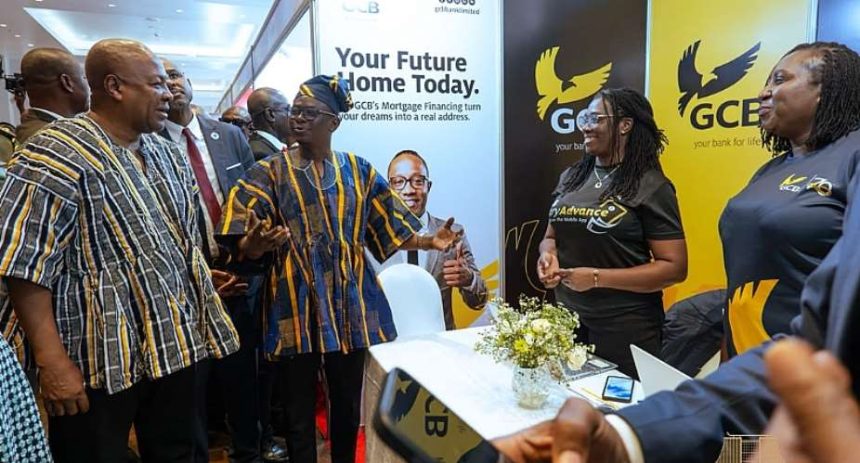
Ghanaian President John Dramani Mahama has announced plans to allocate GH¢1 billion in the 2027 national budget towards a proposed GH¢3 billion revolving National Housing Fund aimed at expanding access to affordable housing across the country.
The President said he had directed the Minister of Finance, Cassiel Ato Forson, to make the allocation as the government’s contribution to the fund, which is expected to support housing development and provide sustainable financing for prospective homeowners.
He made the announcement during the opening of the National Conference on Housing Finance in Accra, organised by the National Housing Fund Limited in collaboration with the Ministry of Works, Housing and Water Resources.
The two-day conference was held to commemorate World Habitat Day under the theme, “Adequate Housing for All, Innovative Financing for Ghana’s Housing Future.”
Government Seeks Private Sector Investment in Housing
President Mahama explained that the proposed GH¢1 billion government contribution would not be the fund’s only source of financing.
He identified pension funds, insurance companies, development finance institutions and diaspora investors as potential contributors to the initiative.
According to the President, mobilising long-term investment from these institutions would help provide the capital required for housing projects while creating opportunities for private sector participation.
He also highlighted the importance of blended financing arrangements, explaining that carefully targeted public and concessional funding could attract private investment, reduce risks and support viable housing developments.
The initiative is expected to strengthen the country’s housing finance system and provide additional resources for expanding affordable housing supply.
National Housing Fund Expands Its Mandate
The President also explained that the transition from the National Home Ownership Fund Limited to the National Housing Fund Limited was designed to broaden the institution’s responsibilities.
Rather than concentrating primarily on financing homeownership, the restructured institution would support wider housing delivery and expand affordable housing options for different categories of households.
Mahama said the government intended to achieve this through the effective utilisation of public and institutional land banks, increased private sector investment and the revival of stalled housing projects.
He disclosed that the Saglemi Affordable Housing Project was expected to deliver 1,500 housing units by 2027.
Additionally, a district housing programme was being piloted in eight districts through collaboration between the Ministry of Works, Housing and Water Resources and the National Housing Fund.
The government also expects developments such as Oxygen City in Ho, Volta Region, by the Tema Development Corporation, and Green City at Dedesua in the Ashanti Region, developed by the State Housing Company, to contribute to the country’s housing supply.
Affordable Housing Requires Sustainable Financing
President Mahama stressed that economic stability would play an important role in improving access to housing finance.
He noted that lower inflation and more favourable lending conditions could create better opportunities for construction financing and mortgage lending.
However, he maintained that the benefits of economic improvements must translate into more affordable housing opportunities for ordinary households.
The President emphasised the need to mobilise financing that reflects the long-term nature of housing investments, noting that sustainable housing development requires more than the availability of construction capital.
He called for coordinated planning involving land administration, development approvals, infrastructure provision and housing finance.
Government Pushes for Integrated Housing Communities
Beyond increasing the number of houses available, Mahama said housing development must prioritise the creation of integrated communities supported by essential infrastructure and social amenities.
He identified roads, water supply, drainage, sanitation, schools and healthcare facilities as important components of sustainable residential developments.
According to him, reducing the purchase price of houses would offer limited benefits to households if residents continued to spend excessively on transportation and accessing basic services.
The President also called for residential developments to be incorporated into the planning of industrial enclaves under the government’s economic transformation agenda.
He explained that providing housing close to industrial centres could reduce commuting expenses, improve workers’ productivity and give families more time together.
However, he warned that uncertainties surrounding land ownership and delays in development approvals continued to increase construction costs, discourage investment and place additional financial pressure on households.
Housing Finance Conference to Support Industry Collaboration
The Minister of Works, Housing and Water Resources, Ahmed Ibrahim, who represented at the conference, proposed that the National Housing Finance Conference become an annual event.
He said the platform would provide an opportunity for government institutions, financial organisations, developers, professionals, organised labour, academia and development partners to assess progress and develop practical solutions to Ghana’s housing challenges.
The Chief Executive Officer of the National Housing Fund Limited, Prosper Hoetu, also stressed the need for a housing finance system that recognised the different financial circumstances of households and provided multiple pathways to homeownership.
The proposed GH¢3 billion revolving National Housing Fund represents a significant component of Ghana’s broader affordable housing agenda, with the government seeking to combine public financing, institutional investment and private sector participation to expand housing delivery.
Its effectiveness will ultimately depend on the ability to translate the proposed financing arrangements into completed housing projects and affordable options for households across the country.