

Nigeria’s Housing Strategy Draws Interest from Across Africa
African countries have expressed interest in adopting Nigeria’s Renewed Hope Housing Public-Private Partnership (PPP) model to expand affordable housing delivery across the continent.
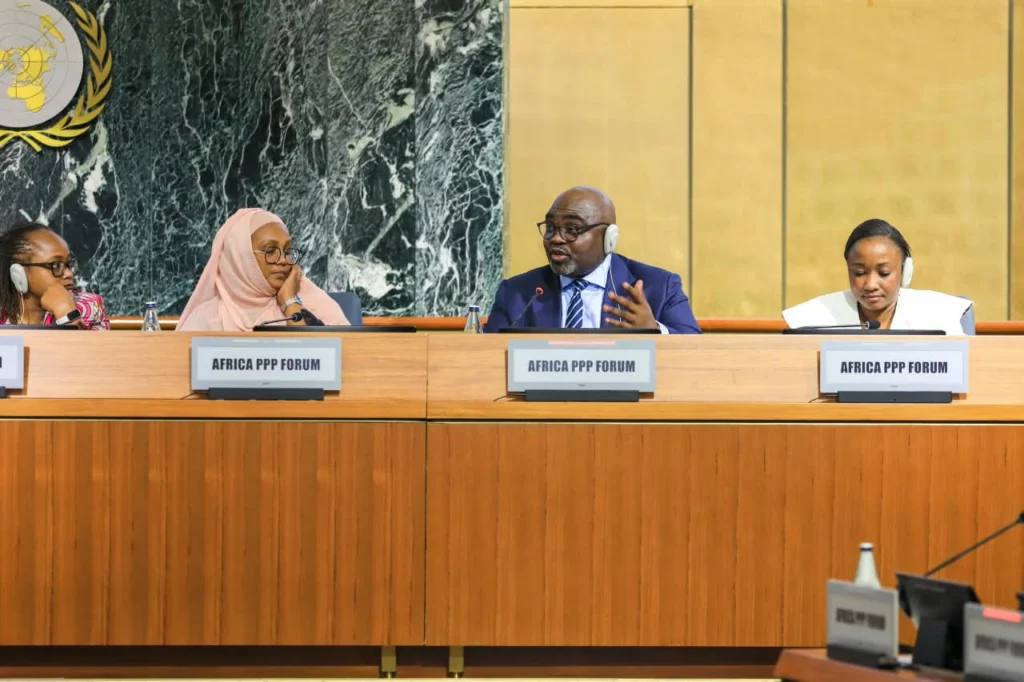
The model was presented by the Director-General of the Infrastructure Concession Regulatory Commission (ICRC), Dr Jobson Oseodion Ewalefoh, at the Second Forum for Public-Private Partnership Units in Africa in Addis Ababa, Ethiopia.
According to a statement issued by Ifeanyi Nwoko, Acting Head of Media and Publicity at the ICRC, the forum attracted delegations from 36 countries.
The event was held at the Africa Hall of the United Nations Economic Commission for Africa (UNECA) and co-organised by UNECA, the African Development Bank (AfDB) and the African Legal Support Facility (ALSF).
It was held under the theme, “Making Social Sector PPPs Work: From Policy Ambition to Effective Service Delivery.”
The forum brought together heads of PPP units, development finance institutions, private-sector operators and transaction advisers to examine how public-private partnerships could support affordable housing, healthcare, education, sanitation and water supply.
Nigeria Presents 100,000-Home Housing Programme
Speaking at the forum, Ewalefoh explained that Nigeria’s Renewed Hope Cities programme was designed to deliver 100,000 housing units across selected cities through a joint venture concession arrangement involving the private sector.
Under the model, private-sector partners take responsibility for the land, design, financing and construction, while the government introduces measures to reduce risks that could discourage investment and make the homes more affordable.
Ewalefoh said the arrangement differed from conventional PPP structures because the government did not have to directly finance the construction costs.
Instead, government support is directed towards creating conditions that attract private capital, including providing access to concessionary financing, facilitating prospective buyers and supporting infrastructure development.
He said the approach could provide a model for other African countries seeking to increase housing supply without placing the entire financial burden on public budgets.
Concessionary Financing Supports Housing Delivery
The ICRC director-general explained that high commercial lending rates in Nigeria, which exceed 23 per cent, had made financing expensive for property developers and prospective homeowners.
To address this challenge, the government introduced measures to reduce project risks and improve affordability.
One of the measures involves identifying middle-income federal civil servants as prospective buyers, helping developers establish a clearer market for the housing units.
The government also committed to providing access roads to semi-urban project locations and facilitating access to concessionary financing.
The Federal Mortgage Bank of Nigeria unlocked approximately $19 million in single-digit interest-rate funding, while the Family Homes Fund provided an additional $20 million in concessionary loans.
Buyers are also supported through the MOFI Real Estate Investment Fund, which has approximately $112 million available to provide mortgages at lower interest rates.
The government further negotiated sale prices with the developer to help keep the homes affordable and introduced a limit of one housing unit per buyer to discourage speculative purchases.
According to the ICRC, these measures reduced the project’s effective cost by approximately 30 per cent.
The financing arrangement combines about $39 million in concessionary funding with private-sector investment to support a project with an estimated construction cost of $125 million.
Ewalefoh said the model demonstrated how government policies, access to land, buyer facilitation and affordable financing could attract private investment into housing development.
African Delegates Examine Nigeria’s Approach
Nigeria’s presentation generated considerable interest during the forum’s question-and-answer session.
Delegates sought further information on how the country’s risk-reduction measures could be adapted to their own housing programmes, particularly the use of prospective-buyer arrangements and concessionary financing.
These mechanisms are intended to make projects more attractive to private investors while keeping housing costs within reach of the intended beneficiaries.
The discussions also allowed participating countries to exchange experiences on structuring PPP projects, allocating risks between public and private partners, and managing implementation challenges.
The ICRC said the forum provided an opportunity for Nigeria to learn from other countries’ experiences and apply relevant lessons to its own pipeline of social infrastructure projects.
Nigeria was among five countries that presented projects during the forum’s project clinics, alongside Malawi, Kenya, Djibouti and Côte d’Ivoire.
The clinics allowed participating PPP units to present ongoing projects, discuss implementation difficulties and receive expert feedback.
Forum Focuses on Affordable Social Infrastructure
Beyond housing, the two-day forum examined how PPP arrangements could help deliver essential public services in areas where user charges alone may not generate enough revenue to repay private investors.
Participants discussed approaches to improving the financial sustainability, affordability and accountability of social infrastructure projects.
The programme included a Leaders’ Dialogue, thematic breakout sessions and project clinics covering risk allocation, availability payments, viability gap funding, subnational PPP models and contract management.
The discussions built on the forum’s inaugural edition in 2024, which brought together more than 30 African PPP units to consider approaches to climate-resilient infrastructure.
This year’s meeting expanded the discussion to include housing, healthcare, education, sanitation and water supply.
The organisers said collaboration between governments, development finance institutions and private operators remained important to translating policy objectives into projects that could be implemented effectively.
For Nigeria, the interest expressed by other African countries presents an opportunity to share its approach to housing finance and private-sector participation while learning from the experiences of other nations.
The ICRC said the exchange of knowledge and practical experience would help participating countries identify workable approaches to delivering social infrastructure through public-private partnerships.