

Nigerian banks closed a net 476 branches and cash centres between 2022 and 2025, reducing the country’s physical banking network by 8.8 per cent.
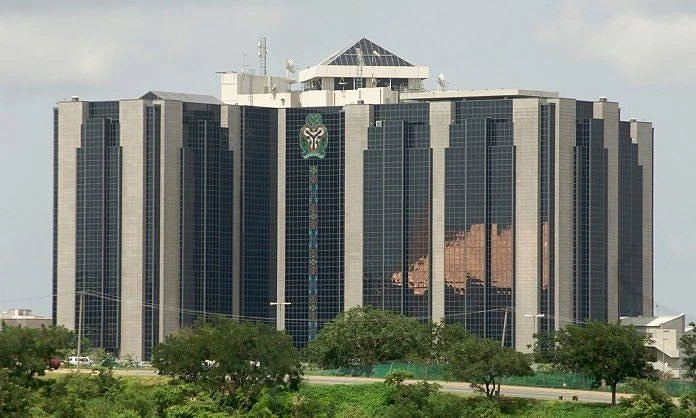
Data from the Central Bank of Nigeria’s 2025 Statistical Bulletin for the Financial Sector showed the decline.
The number of bank branches and cash centres fell from 5,410 in 2022 to 4,934 in 2025.
The contraction accelerated after 2023, with most of the decline recorded in 2024 and 2025.
The number of locations dropped by 37 in 2023, followed by 229 in 2024 and another 210 in 2025.
The decline occurred despite an increase in the number of banks operating in Nigeria during part of the period.
The number of banks rose from 32 in 2022 to 33 in 2023 and 35 in 2024 before falling to 34 in 2025.
Lagos records biggest decline
Lagos recorded the largest reduction in physical banking locations during the three-year period.
The state had 1,602 branches and cash centres in 2022.
That figure fell to 1,532 in 2023, 1,521 in 2024 and 1,444 in 2025.
The decline represents 158 fewer locations, equivalent to a 9.9 per cent reduction.
Lagos alone accounted for about one-third of the nationwide decline.
Despite the reduction, the state remained Nigeria’s biggest concentration of physical banking infrastructure.
Its 1,444 locations represented about 29 per cent of the national total in 2025.
Abuja loses 38 banking locations
The Federal Capital Territory also recorded a significant decline.
Abuja had 400 branches and cash centres in both 2022 and 2023.
The figure dropped to 391 in 2024 before falling further to 362 in 2025.
This represents a net loss of 38 locations, or 9.5 per cent, within three years.
Ekiti recorded one of the sharpest contractions.
Its physical banking network fell from 107 locations in 2022 to 57 in 2025.
The 50-location decline represented a 46.7 per cent reduction.
Other states also experienced substantial reductions.
Enugu lost 44 locations, while Oyo recorded a decline of 41.
Ondo fell from 127 to 105 locations, while Plateau dropped from 80 to 61.
Osun declined from 113 to 96, Cross River from 83 to 67 and Rivers from 290 to 275.
Some states expand branch networks
The contraction was not uniform across the country.
Delta added 23 physical banking locations between 2022 and 2025.
Its total increased from 173 to 196 during the period.
Edo also expanded from 155 to 165 locations, while Jigawa rose from 31 to 37.
Kogi recorded an increase from 63 to 68 locations.
The figures also reveal a significant geographical imbalance in access to physical banking infrastructure.
Lagos had 1,444 locations in 2025, compared with only 23 in Yobe and 26 in Taraba.
Zamfara had 28 locations, while Bayelsa and Gombe had 31 each.
Ebonyi recorded 32 physical banking locations.
Banking shifts toward digital channels
The decline in physical locations points to the rapid migration of banking services towards electronic platforms.
The trend reflects a changing banking model in which customers increasingly use digital and alternative payment channels instead of visiting branches.
The CBN has also encouraged greater adoption of alternative payment channels to expand financial access.
Acting Director of Corporate Communications and Investor Relations at the CBN, Hakama Sidi-Ali, made the call during the 2026 CBN Fair in Lokoja, Kogi State.
She said alternative payment channels were particularly important for farmers, traders, small businesses and informal-sector operators with limited access to conventional banking services.
The shrinking branch network could reduce operating costs for banks and accelerate digital adoption.
However, the uneven distribution of physical locations also raises questions about access for customers who depend on conventional banking services.
The challenge for banks and regulators will be balancing digital expansion with adequate access to financial services across underserved communities.