

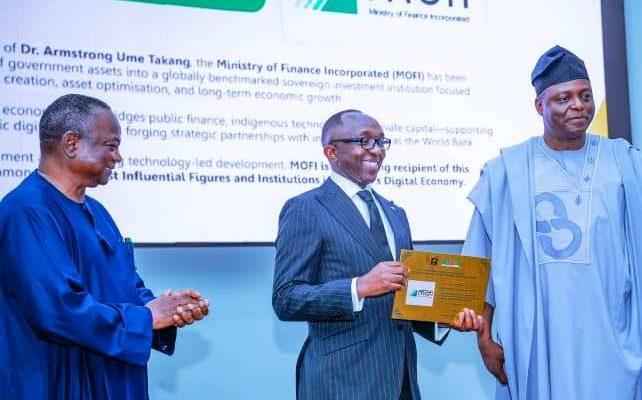
The Ministry of Finance Incorporated (MOFI) has identified public assets worth about N25 trillion as part of an ongoing exercise to establish what the government owns and improve the management and performance of those assets.
The Managing Director and Chief Executive Officer of MOFI, Dr Armstrong Ume Takang, disclosed this on Wednesday in Abuja at the official launch of the Renewable Asset Management Company (RAMCO).
RAMCO was established through a partnership involving the Rural Electrification Agency (REA), MOFI and the Infrastructure Corporation of Nigeria (InfraCorp) to provide a professional framework for managing and sustaining renewable energy assets.
Takang said Nigeria had accumulated a large stock of public assets through government programmes and infrastructure investments, but insufficient attention had been given to their maintenance and continued performance.
He warned that billions of naira invested in infrastructure could be wasted if facilities were abandoned or poorly maintained after commissioning.
He said the country could not continue spending heavily on infrastructure only to abandon or rebuild existing facilities because of weak maintenance systems.
“We have a plethora of assets scattered around the country, many of them deployed through government programmes and large infrastructure investments. The question is: are those assets delivering the value for which they were established?” Takang said.
According to him, the challenge is particularly evident in renewable energy installations at educational institutions and teaching hospitals.
He said government had received complaints about renewable energy assets becoming unusable because of relatively minor faults involving components such as solar panels and batteries, despite the significant investments made in the projects.
Takang said the situation had sometimes resulted in agencies returning to government for additional funding to maintain or rebuild assets that had already been financed and deployed.
He described the situation as a reality that needed to be addressed through a more sustainable management model.
According to Takang, MOFI’s approach to managing public assets is based on three priorities: identifying government-owned assets and determining their value, professionalising their management and mobilising capital to support productive investments.
He said establishing what government owns was essential because there had historically been greater focus on Nigeria’s debt than on the value and performance of government-owned assets.
“Until we are able to establish what we own, we will not be in a position to optimise those assets and make the best use of them,” he said.
Takang said MOFI’s asset identification and verification exercise had so far identified assets valued at about N25 trillion.
He said the objective was to ensure the assets were properly managed, generated appropriate revenues and continued to provide the economic and social benefits for which they were created.
He added that, where appropriate, revenue generated from public assets could contribute to debt servicing while also supporting their maintenance and sustainability.
On corporate assets, Takang said government-owned and government-linked entities needed to be professionally managed through proper governance structures, performance targets, boards and management teams.
He identified capital mobilisation as the third component of MOFI’s strategy, saying available resources should be channelled into productive areas of the economy.
Takang said RAMCO fits into the three priorities by providing a structure through which renewable energy assets can be identified, professionally managed and potentially used to attract additional capital.
He said the initiative could also reduce pressure on public finances by ensuring existing assets were fully utilised before government sought additional funds for expansion.
“We must ensure that before we go back to government to ask for money to expand them or build new ones, we must make the most use of what we already have,” he said.
Takang said properly structured and professionally managed renewable energy assets could attract private-sector investment.
He explained that participating companies could leverage their assets and balance sheets to attract private capital and expand renewable energy infrastructure.
He also said Nigeria needed to rethink its electricity supply model because national demand was significantly higher than what the national grid currently provides.
According to him, the gap makes decentralised and distributed energy solutions increasingly important, particularly renewable energy systems capable of supplying electricity directly to communities and institutions.
Takang described RAMCO as part of a new approach to delivering power to communities rather than simply creating another government institution.
He said the objective was to ensure renewable energy assets continued to deliver their intended impact, generate returns and create opportunities for further investment.
He expressed confidence that stronger governance, professional management and accountability would improve the performance of Nigeria’s renewable energy investments.
The launch comes as the Federal Government seeks to strengthen the sustainability of renewable energy infrastructure. REA described RAMCO as a specialised platform for the professional management, optimisation and long-term sustainability of renewable energy assets, with the broader objective of connecting such infrastructure to long-term private capital.