

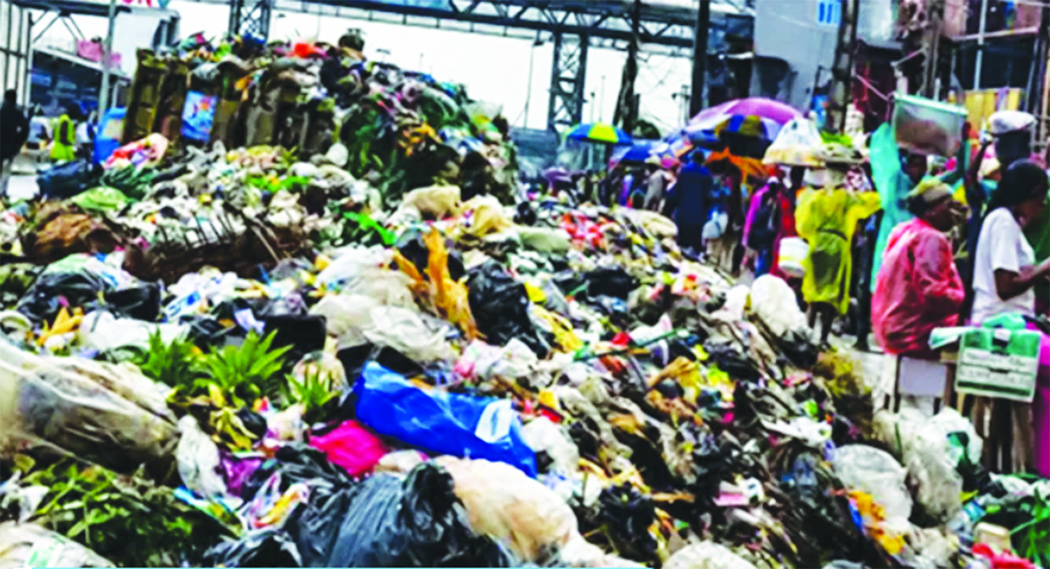
Lagos Waste Management Crisis Deepens as Refuse Piles Up Across Neighbourhoods
Lagos, Nigeria’s commercial centre and one of Africa’s largest urban areas, is facing mounting concerns over waste management as refuse continues to accumulate along streets, markets, road medians and drainage channels in several parts of the state.
The growing heaps of uncollected rubbish have created unpleasant surroundings, disrupted movement and raised concerns about environmental pollution and public health.
Neighbourhoods affected include Mushin, Ebute Metta, Agege, Egbeda, Idimu, Ojuelegba, Mile 2, Orile, Apapa, Okokomaiko, Ajah, parts of Lekki, Lawanson, Ikeja, Bariga, Surulere, Ajegunle, Boundary, Ojo, Ikorodu, Festac Town, Satellite Town, Ikotun, Oshodi, Iyana-Iba, Alaba, Isolo and Abule Egba.
In some locations, refuse has spilled onto roads and blocked drainage channels, creating difficulties for motorists, pedestrians, businesses and residents.
The situation has continued despite government efforts to clear refuse hotspots and improve collection services. Residents have reported missed collections lasting weeks or months, even where they pay monthly charges for waste disposal.
Waste collection system faces operational challenges
Lagos State’s waste management system relies on a partnership between the Lagos State Waste Management Authority (LAWMA) and accredited Private Sector Participants (PSPs).
LAWMA oversees the system, including policy and supervision, while private operators are assigned districts and local government areas to collect residential and commercial waste.
Operators are expected to collect household refuse at least once a week. However, the reported accumulation of waste across several neighbourhoods has raised questions about the consistency of service delivery and the monitoring of contractors.
PSP operators have attributed some of their difficulties to higher diesel prices, vehicle maintenance costs and the distance between collection areas and disposal facilities.
State authorities have also acknowledged operational bottlenecks, shortages of trucks and the underperformance of some operators.
When collection vehicles break down or spend extended periods waiting to discharge waste, fewer trucks are available to serve neighbourhoods. These delays can affect collection schedules and allow refuse to accumulate.
The government has responded by clearing refuse hotspots and reintroducing monthly environmental sanitation exercises. However, the persistence of the problem has renewed concerns about whether the existing arrangements can meet the needs of a rapidly growing city.
Lagos generates up to 15,000 tonnes of waste daily
The volume of refuse generated across the state adds to the challenge.
Lagos Commissioner for the Environment and Water Resources, Tokunbo Wahab, has said the state generates between 13,000 and 15,000 tonnes of municipal waste daily.
Managing this volume requires sufficient collection vehicles, functional disposal facilities, efficient transportation and effective oversight of private operators.
The current situation has also revived memories of the waste management difficulties Lagos experienced between 2015 and 2019.
During that period, refuse accumulated along major roads, in markets and around drainage channels as the state struggled with operational and infrastructure problems.
In 2017, the administration of former Governor Akinwunmi Ambode introduced Visionscape in an effort to modernise waste collection and evacuation.
The arrangement encountered difficulties, however, as the new operator struggled to meet expectations. Tensions also emerged over the reduced role of LAWMA personnel, while residents continued to contend with accumulated refuse.
The recurring challenges have brought renewed attention to the need for a waste management system capable of operating consistently rather than relying mainly on emergency clean-up exercises.
Public health and environmental risks
The accumulation of refuse creates more than an unpleasant appearance. Decomposing waste can attract rats, flies, cockroaches and mosquitoes, increasing exposure to disease-carrying pests.
Contaminated materials and sharp objects can also cause injuries, while poor waste disposal can contribute to environmental contamination.
During rainfall, rubbish can be washed into waterways, wells and other water sources. Waste that blocks drainage channels can also worsen local flooding by restricting the movement of stormwater.
Open burning of refuse releases smoke and other pollutants that can aggravate respiratory problems and expose nearby residents to additional health risks.
These effects can extend beyond individual households to businesses, schools, public facilities and road users.
For a densely populated city, reliable waste collection and safe disposal are therefore essential parts of public health protection, drainage management and urban development.
Sanwo-Olu orders increased waste evacuation
Lagos State Governor Babajide Sanwo-Olu has directed an immediate increase in waste evacuation across affected areas.
The governor said LAWMA, the Lagos State Environmental Protection Agency (LASEPA) and the Ministry of the Environment were working to address the backlog.
He said additional trucks and personnel had been deployed to clear accumulated refuse and urged residents to support the clean-up by disposing of waste properly.
The governor also warned against dumping rubbish on roads and in drainage channels.
Responding to criticism of the government’s waste management and flood control efforts by Gbadebo Rhodes-Vivour, the African Democratic Congress (ADC) governorship candidate for 2027, Wahab acknowledged that waste collection services had not met residents’ expectations.
However, he disputed the suggestion that the government’s response was limited to emergency evacuation.
Wahab explained that the waste management process involved several connected stages, from collection in neighbourhoods to transportation and final disposal. Delays at disposal facilities, he said, could affect the availability of trucks and disrupt collection schedules.
Government plans wider reforms
According to Wahab, Lagos is pursuing a broader restructuring of its waste management system.
The plans include modern transfer loading stations, material recovery facilities, expanded recycling and composting, and the Epe waste-to-energy project.
Transfer stations can help improve the movement of refuse from collection vehicles to larger transport systems, while material recovery facilities can support the sorting and recovery of recyclable materials.
Recycling and composting can also reduce the amount of waste requiring final disposal. The proposed waste-to-energy project forms part of the state’s wider efforts to explore alternatives to conventional waste disposal.
The government is also strengthening its monitoring of waste contractors.
Measures include property enumeration, geocoded service locations, GPS tracking, weighbridge measurements, collection records and recovery data. Wahab said operators that fail to meet their obligations could face sanctions or termination of their contracts.
These measures are intended to provide better information about collection coverage, contractor performance and the movement of waste through the system.
Accountability and financing remain important
The waste crisis has renewed questions about how waste collection is funded, how contractors are supervised and what happens when service providers fail to meet agreed standards.
Private operators have pointed to rising operating expenses, while residents have complained about paying for services that are not consistently delivered.
A sustainable system requires adequate funding, functional vehicles and disposal infrastructure, regular monitoring and clear consequences for poor performance.
Contracts can be linked to measurable service standards, while transparent reporting can help residents understand whether operators are meeting their obligations. Service charges also need to be matched by visible and reliable improvements in collection.
Private investment and external partnerships could support major infrastructure projects, but the day-to-day collection system must also work effectively.
Lagos’ waste management challenge is therefore not simply about removing the rubbish already on the streets. It is also about ensuring that waste is collected on schedule, transported efficiently and managed safely before it becomes a public health or environmental problem.
With the state generating thousands of tonnes of municipal waste daily, consistent collection and accountable operations will be essential to keeping neighbourhoods clean, protecting drainage systems and supporting the long-term development of the megacity.