

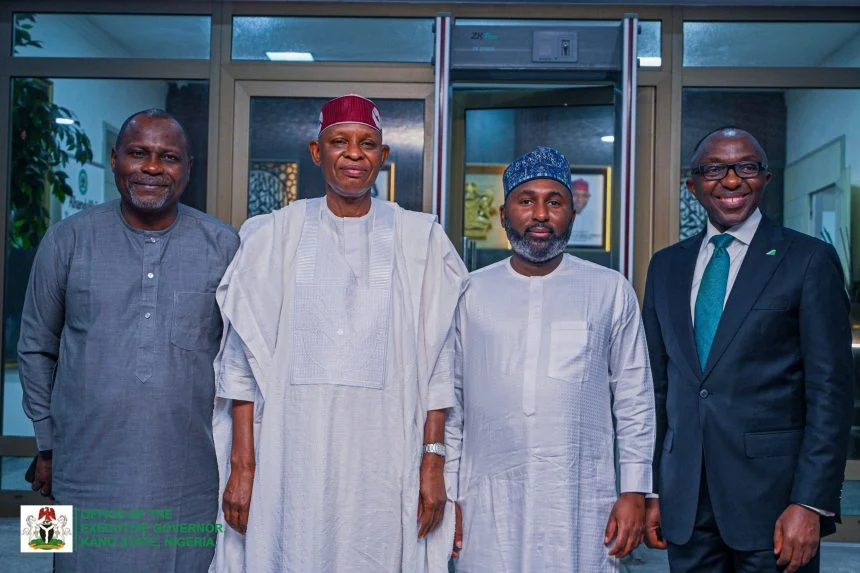
Kano State Governor, Abba Kabir Yusuf, has met with officials of the Ministry of Finance Incorporated (MOFI) and construction firm Mota-Engil Nigeria ahead of the groundbreaking ceremony for the ₦1.05 trillion Kano Light Rail Project recently approved by President Bola Ahmed Tinubu.
The meeting, held at the Kano State Governor’s Lodge in Asokoro, Abuja, focused on final preparations for the commencement of the landmark rail project aimed at transforming urban transportation in Kano State.
The delegation was led by the Managing Director of MOFI, Dr. Armstrong Ume Takang, alongside the Chairman of Mota-Engil Nigeria, Kola Karim.
Kano Light Rail to Transform Urban Transportation
According to a statement issued by the governor’s spokesperson, Sunusi Bature Dawakin Tofa, the ₦1.05 trillion project is designed to improve connectivity across Kano, ease traffic congestion, and boost economic activities throughout the state.
The rail system is also expected to provide residents with a modern, safe and efficient mass transit network while supporting sustainable urban development.
Governor Yusuf Reaffirms Commitment
Governor Yusuf reiterated the Kano State Government’s commitment to working closely with the Federal Government and project contractors to ensure the successful delivery of the light rail project.
He described the initiative as a strategic investment that will strengthen Kano’s position as the commercial hub of Northern Nigeria and significantly improve public transportation for millions of residents.
Tinubu Commended for Project Approval
The governor expressed appreciation to President Bola Ahmed Tinubu for approving the multi-billion-naira infrastructure project, describing it as a major boost to Kano’s economic growth and development.
He also commended the Chairman of the House of Representatives Committee on Appropriations, Hon. Abubakar Kabir Bichi, for his legislative support, which contributed to the project’s approval.
Economic Benefits Expected
Upon completion, the Kano Light Rail Project is expected to enhance mobility, reduce travel time, stimulate business activities and improve the state’s overall transportation infrastructure.
The project is also anticipated to create employment opportunities during construction and operation while contributing to long-term economic development in Kano State.