

The Federal Government has unveiled plans to establish a comprehensive regulatory framework for Nigeria’s housing sector, revealing that the country’s real estate and construction industries contributed more than N77 trillion to the economy in 2025 despite operating without a unified regulatory system.
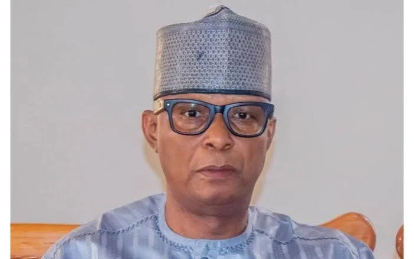
The Minister of Housing and Urban Development, Muttaqha Rabe Darma, disclosed this on Tuesday during a stakeholders’ validation workshop on the proposed National Housing and Built Environment Regulation Policy and the National Mortgage Industry Policy in Abuja.
According to the minister, the workshop marks the final stage before the proposed policies are presented to the Federal Executive Council (FEC) for approval.
“This gathering is not a ceremony. It is the last door these policies pass through before the Federal Executive Council. What you say here will change what I carry to Council. I am not asking for applause. I am asking you to be critical,” Darma said.
Real Estate, Construction Contributed N77tn to Nigeria’s Economy
Darma said the rebasing of Nigeria’s Gross Domestic Product (GDP) showed the enormous contribution of the housing sector to the economy.
“After the rebasing of our accounts, real estate services alone account for about 13.4 per cent of Nigeria’s GDP, roughly N41 trillion. It is our third-largest sector, ahead of telecommunications and crude oil. With construction added, the two crossed N77 trillion in 2025,” he said.
Despite the sector’s economic importance, the minister lamented that the absence of a unified regulatory framework has exposed Nigerians to fraudulent property transactions, weak consumer protection and poor industry accountability.
FG Moves to Protect Homebuyers
Darma said the proposed National Housing and Built Environment Regulation Policy is designed to improve transparency, strengthen investor confidence and protect homebuyers.
“We regulated banking and got a stable financial system. We regulated telecommunications and turned fewer than half a million telephone lines into over 200 million. We regulated petroleum and power. We never regulated housing.
“So our biggest sector is still the one where a man can print a brochure in the morning, collect a widow’s savings by afternoon, and vanish before nightfall,” he said.
He cited Dubai as a model, noting that compulsory escrow accounts and a dedicated real estate regulatory agency transformed the emirate into one of the world’s most trusted property markets.
According to him, Dubai recorded over 270,000 property transactions valued at about $250 billion in 2025 because of strong regulatory institutions.
“Dubai is smaller than Kano. The difference is not money. The difference is trust, and trust is manufactured by regulation,” he added.
Minister Raises Alarm Over Building Collapse
The minister expressed concern over the rising incidence of building collapse in Nigeria, revealing that more than 650 buildings have collapsed since 1974, resulting in over 1,600 deaths.
“Those are not figures; they are funerals. Almost every one of those buildings had a designer, a builder and an approving officer. In most cases, nobody was licensed, and nobody was punished,” he said.
Mortgage System Needs Urgent Reform
Darma also criticised Nigeria’s mortgage system, describing mortgage penetration as one of the lowest globally.
He noted that although about six million Nigerians contribute to the National Housing Fund (NHF), the Federal Mortgage Bank of Nigeria (FMBN) approves fewer than 500 mortgages annually.
“Our mortgage-to-GDP ratio is between 0.02 and 0.07 per cent. South Africa is 30 per cent. Britain is 70 per cent. That is not poverty; that is bad plumbing,” he said.
Six Pillars of the Proposed Housing Policy
The minister explained that the proposed National Housing and Built Environment Regulation Policy is anchored on six key pillars:
- Licensing of developers and estate agents.
- Escrow protection for homebuyers’ funds.
- Professional registration and construction quality assurance.
- Land administration and land-value capture.
- Urban renewal without displacement.
- Establishment of a National Housing Data Observatory.
He also disclosed that the policy proposes the establishment of a National Housing Industry Regulatory Commission to oversee the housing sector, similar to the Nigerian Communications Commission (NCC) and the Nigerian Electricity Regulatory Commission (NERC).
FG Plans Mortgage Reforms
Darma said the proposed National Mortgage Industry Policy would establish a National Housing Finance Authority, reform the Federal Mortgage Bank of Nigeria, expand the National Housing Fund to include traders, artisans and commercial drivers contributing from N5,000 monthly, and create a structured housing investment window for Nigerians in the diaspora.
He added that the ministry had adopted the World Bank Adequate Housing Index and the UN-Habitat Household Crowding Index to determine Nigeria’s housing deficit, which now stands at 15 million housing units.
According to him, stakeholders will review the methodology before the report is submitted to the Federal Executive Council for approval.
The minister said recommendations from five technical working groups would be incorporated into the final policy documents to support reforms aimed at strengthening housing regulation, improving mortgage access, attracting investment and delivering affordable housing across Nigeria.