

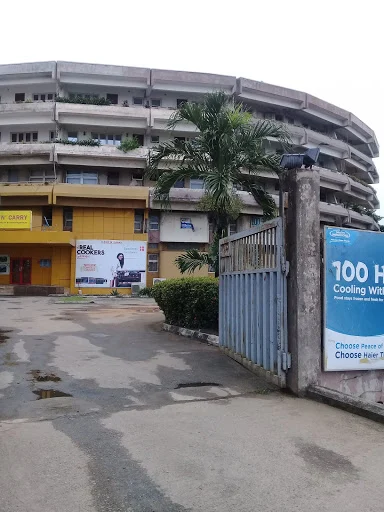
The Edo State Government’s decision to sell Edo House, its liaison office located in Victoria Island, Lagos, has sparked fresh controversy, with stakeholders urging Governor Monday Okpebholo to reconsider the move.
The proposed sale has drawn criticism from political leaders, professionals and civil society groups, who argue that the property is one of the state’s most valuable public assets and should be preserved for future generations.
Findings indicate that plans to dispose of the property, situated at 1225 Ahmadu Bello Way, Victoria Island, have reached an advanced stage.
The state government reportedly intends to use proceeds from the sale to finance the construction of a new International Conference Centre at the Garrick Memorial School grounds in Benin City.
Edo House Has Become a Financial Burden – Government
Confirming the plan, the Commissioner for Information and Strategy, Prince Kassim Afegbua, said Edo House had become a financial liability rather than a productive asset.
According to him, the government continues to spend significant resources maintaining the ageing property without receiving rental income.
“Yes, we just have a building, and we are losing money. Even the rent, we are not collecting because the previous administration collected rents upfront for many years.
“We will sell it and use the proceeds to build an International Conference Centre at the Garrick Memorial School grounds in Benin City.
“The conference centre will create employment opportunities and generate revenue for the government. It will serve Edo people better,” Afegbua said.
He added that the decision was aimed at delivering greater economic value and development for the people of Edo State.
Stakeholders Oppose Proposed Sale
The government’s position has, however, attracted widespread opposition from stakeholders who insist that Edo House is more than just a government office.
Former Managing Director of the Edo Development and Property Agency, Dr Pedro Obaseki, described the property as a historic public inheritance that should not be sold.
He urged the state government to explore redevelopment and commercialisation options instead of disposing of one of Edo’s most strategic assets.
“Edo House is not an ordinary property. It is one of Edo’s most valuable assets outside the state. Once sold, it can never be recovered,” he said.
Similarly, an Edo indigene based in Lagos, Linus Ojo, argued that selling the property to fund another project would amount to exchanging a permanent asset for short-term financial gains.
According to him, strategic public assets should be preserved and transformed into revenue-generating investments rather than sold.
Civil Society Warns of Public Backlash
A member of the Edo Civil Society Organisations, who requested anonymity, warned that the proposed sale could trigger widespread public opposition if implemented without adequate consultation.
He described Edo House as an important symbol of the state’s identity in Nigeria’s commercial capital.
“This is a landmark that represents Edo’s history and identity in Nigeria’s commercial capital. Any attempt to sell it without engaging stakeholders will generate avoidable controversy,” he said.
Historic Landmark Faces Uncertain Future
Edo House was built during the administration of the late Brigadier Samuel Ogbemudia when the defunct Bendel State was under military rule.
Over the years, the building has served as Edo State’s official liaison office in Lagos and is regarded as one of the enduring legacies of the former Bendel State administration.
With Governor Okpebholo’s administration reviving plans to dispose of the property, concerns are mounting that the state could permanently lose one of its most valuable public assets.
Government Defends Decision
Responding to the criticisms, Afegbua dismissed the opposition, alleging that many of those resisting the sale benefitted from previous arrangements surrounding the property.
“Those making noise about the sale are people who benefitted from the old order. Our responsibility is to take decisions that will deliver greater value and development for Edo people,” he said.
Despite the government’s assurances, calls continue to grow for the property to be redeveloped into a modern commercial complex capable of generating sustainable revenue while preserving an important part of Edo State’s history and heritage.