

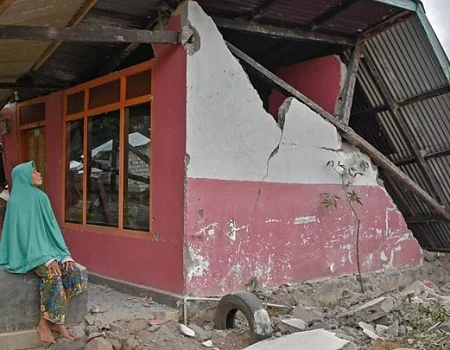
At least 68 people have been killed and more than 200 others injured after a powerful magnitude 7.7 earthquake struck eastern Indonesia, triggering landslides, damaging thousands of homes and disrupting access to affected communities.
The earthquake struck off the coast of Flores Island in East Nusa Tenggara province on Saturday, August 15, with Indonesia’s meteorological agency, BMKG, recording the quake at magnitude 7.7 and a depth of about 15 kilometres.
Rescue operations continue
Rescue teams have been working across the worst-hit areas as authorities search damaged buildings and assess the extent of destruction.
The disaster has left thousands of residents displaced, with many sleeping outdoors or taking shelter in temporary locations because of fears that continued aftershocks could cause further structural collapses.
Nearly 1,600 aftershocks have been recorded since the main earthquake, complicating rescue operations and increasing anxiety among survivors.
Homes and infrastructure damaged
The earthquake caused widespread damage across parts of East Nusa Tenggara, with homes, schools, health facilities and other public infrastructure affected.
Reports indicate that more than 1,300 homes were damaged, while landslides and blocked roads have made it difficult for emergency workers to reach some communities.
Some medical facilities were also damaged, forcing authorities to establish temporary treatment centres to care for injured residents.
Thousands displaced as aid delivery faces challenges
Thousands of survivors remain in temporary shelters and urgently require food, clean water, medicine and other essential supplies.
Authorities have deployed military personnel, police officers and emergency workers to assist with rescue and relief operations. Aircraft and helicopters are also being used to reach communities cut off by damaged roads and landslides.
The Indonesian government has begun moving relief supplies into affected areas, although difficult terrain and damaged infrastructure continue to slow distribution.
Earthquake struck during Independence Day
The disaster coincided with Indonesia’s Independence Day celebrations on Monday.
President Prabowo Subianto led a moment of silence for victims of the earthquake as national celebrations were overshadowed by the disaster and continuing rescue operations.
Authorities in East Nusa Tenggara have declared a state of emergency to accelerate the response and coordinate relief efforts.
Tsunami warning issued after quake
The powerful offshore earthquake initially prompted a tsunami warning.
Indonesia’s BMKG reported tsunami waves at several locations, including a wave measuring about 0.94 metres at Maurole-Ende. The agency subsequently ended the early tsunami warning after monitoring the situation.
Indonesia vulnerable to earthquakes
Indonesia sits along the Pacific Ring of Fire, one of the world’s most seismically active zones, making the country particularly vulnerable to earthquakes, volcanic eruptions and tsunamis.
The latest disaster has once again exposed the challenges faced by communities in remote parts of the archipelago when major earthquakes strike.
Search for survivors continues
Emergency teams are continuing to search damaged structures while authorities assess communities affected by the earthquake.
With thousands displaced, hundreds injured and roads blocked in some areas, the immediate priorities remain rescuing survivors, treating the injured and delivering food, water, medicine and emergency shelter.
Officials have also urged residents to remain vigilant as aftershocks continue.
As the death toll stands at 68 and the scale of destruction becomes clearer, Indonesia faces a major humanitarian and recovery operation in Flores and surrounding areas.